Day 1 — American sector: Pointe du Hoc → Omaha Beach → Normandy American Cemetery → Utah Beach Museum → Sainte-Mère-Église.
Day 2 — British-Canadian sector, based in Arromanches: Mulberry harbour walk → D-Day Museum → D-Day Boat Tour → Juno Beach Centre (Courseulles) → Pegasus Bridge.
Day 3 — Bayeux: War Cemetery → Battle of Normandy Memorial Museum → cathedral → lunch → optional Longues-sur-Mer battery.
Day 1 — The American sector
This is the longest driving day. Start early.
8:30 — Leave Arromanches west via D514.
9:15 — Pointe du Hoc (35 km, 45 min from Arromanches). The Ranger cliff assault site. Craters, bunkers, cliff-edge memorial. Free. Allow 1h.
10:30 — Utah Beach Museum (30 min west). Built on a German blockhouse, restored B-26 bomber. Allow 1h30. Around €10.
12:00 — Sainte-Mère-Église (15 min south). Village where paratrooper John Steele hung from the church spire. Lunch in the village centre. Optional: Airborne Museum next door (allow 1h30, ~€10).
14:30 — Drive back east toward Omaha (45 min).
15:15 — Omaha Beach. Walk the sand. Feel the width and exposure. Les Braves memorial. Allow 45 min.
16:00 — Normandy American Cemetery (Colleville-sur-Mer). 9,388 graves. Visitor centre, Wall of the Missing, ceremony area. Free. Allow 2h — do not rush this. Closes around 18:00.
18:15 — Drive back to Arromanches (30 min). Dinner at the villa or in the village.
Tip: if you have kids, skip Utah Beach Museum on Day 1 (save it for a lighter half-day) and give more time to Omaha and the American Cemetery.
Day 2 — The British-Canadian sector, from Arromanches
Almost no driving. A rest for the legs and the emotions.
9:00 — Walk the Mulberry B harbour at low tide (check tide times). Massive concrete Phoenix caissons on the sand, sixteen Beetle floaters, Whale road sections. Free.
10:30 — Arromanches D-Day Museum. Restored film and model of the Mulberry harbour construction. Allow 1h30. Around €8.
12:00 — Lunch on the seafront or in the village.
14:00 — D-Day Boat Tour (45 min guided cruise over the Mulberry remains, boarding at the Cale Neptune slipway 200 m from Villa Bellevue). Book in advance in high season.
15:30 — Drive to Juno Beach Centre in Courseulles (20 min east). Canadian D-Day museum, well-designed. Allow 2h. Around €9 (€13.50 combined with bunkers).
18:00 — Optional: continue 15 min further east to Pegasus Bridge (Bénouville). The first house in France liberated on June 6, 1944 at 00:16 (Café Gondrée is a landmark). Small memorial museum nearby.
20:00 — Back to Arromanches for dinner.
Day 3 — Bayeux
Slower pace, medieval city, indoor options for a rainy day.
9:30 — Drive to Bayeux (15 min).
10:00 — Bayeux War Cemetery — 4,144 Commonwealth graves, the largest in France. Wall of the Missing (memorial to 1,808 Commonwealth soldiers with no known grave). Free. Allow 1h.
11:00 — Battle of Normandy Memorial Museum (across the road). The full campaign, from D-Day to the Falaise pocket. Allow 1h30. Around €8 (2026 rates: Arromanches Museum €12.90). A Bayeux 2-Museum Pass (€14) combines it with the Baron Gérard Museum.
13:00 — Lunch in the historic centre.
14:30 — Bayeux Cathedral (Notre-Dame, 1077, Norman Gothic). Free. 45 min.
15:30 — Wander the medieval centre: the water mill, Rue Saint-Jean, the cobbled lanes. Shopping: Norman ciders, calvados, camembert, biscuits.
17:00 — On the way back to Arromanches, stop at Longues-sur-Mer battery (5 min detour) — the best-preserved German coastal battery, four guns still in their casemates. Free. 45 min.
18:30 — Back to Arromanches.
Note: the Bayeux Tapestry is on loan to the British Museum in London (Sep 10, 2026 - Jul 11, 2027); the Bayeux Museum in Normandy reopens in 2027.
Adjustments
With kids (ages 6-12)
Reduce museum time on Day 1. On Day 2, the beach and the Mulberry caissons are perfect for children — let them run. The D-Day Boat Tour is a highlight from age 4. On Day 3, the cathedral and cemetery are age-appropriate for older kids; younger ones might prefer more beach time.
Without a car
Day 1 (American sector) requires either a car or a guided minibus tour departing from Bayeux. Day 2 works from Arromanches with the NoMad Car regional bus for Juno Beach Centre; Pegasus Bridge is harder without a car. Day 3 (Bayeux): the NoMad Car bus line 121 connects Arromanches to Bayeux year-round.
Rainy day fallback
Swap outdoor cemetery/beach time with indoor museums: Arromanches D-Day Museum, Utah Beach Museum, Juno Beach Centre, Bayeux Battle of Normandy Museum, Airborne Museum in Sainte-Mère-Église. Normandy has 700 mm of rain per year — always pack a waterproof.
What this itinerary skips
Three days is the minimum, so we skip: Cherbourg Cité de la Mer (aquarium and submarine, worth a full day), the Falaise pocket sites (the closing of the Normandy campaign, one day), Sword Beach in detail (Ouistreham, Grand Bunker), the Normandy Impressionist countryside (Bayeux to Deauville). For those, see our 5-day itinerary.
Quick Q&A — 3-day D-Day trip
Is 3 days enough?
Minimum for a meaningful visit. Covers American sector, British-Canadian sector, and Bayeux. 5 days is more comfortable.
Best base for 3 days?
Arromanches — central, 30 min or less to every beach, 15 min to Bayeux.
Book museums in advance?
Peak season (June-August, June 6): yes. Shoulder season: walk-in works.
Do I need a car?
Yes for Day 1. Day 2 and Day 3 are doable with the regional bus and walking.
Skip a day if I only have 2?
Combine Day 2 + Day 3 into a light day (Arromanches morning, Bayeux afternoon), keep Day 1 for the American sector.
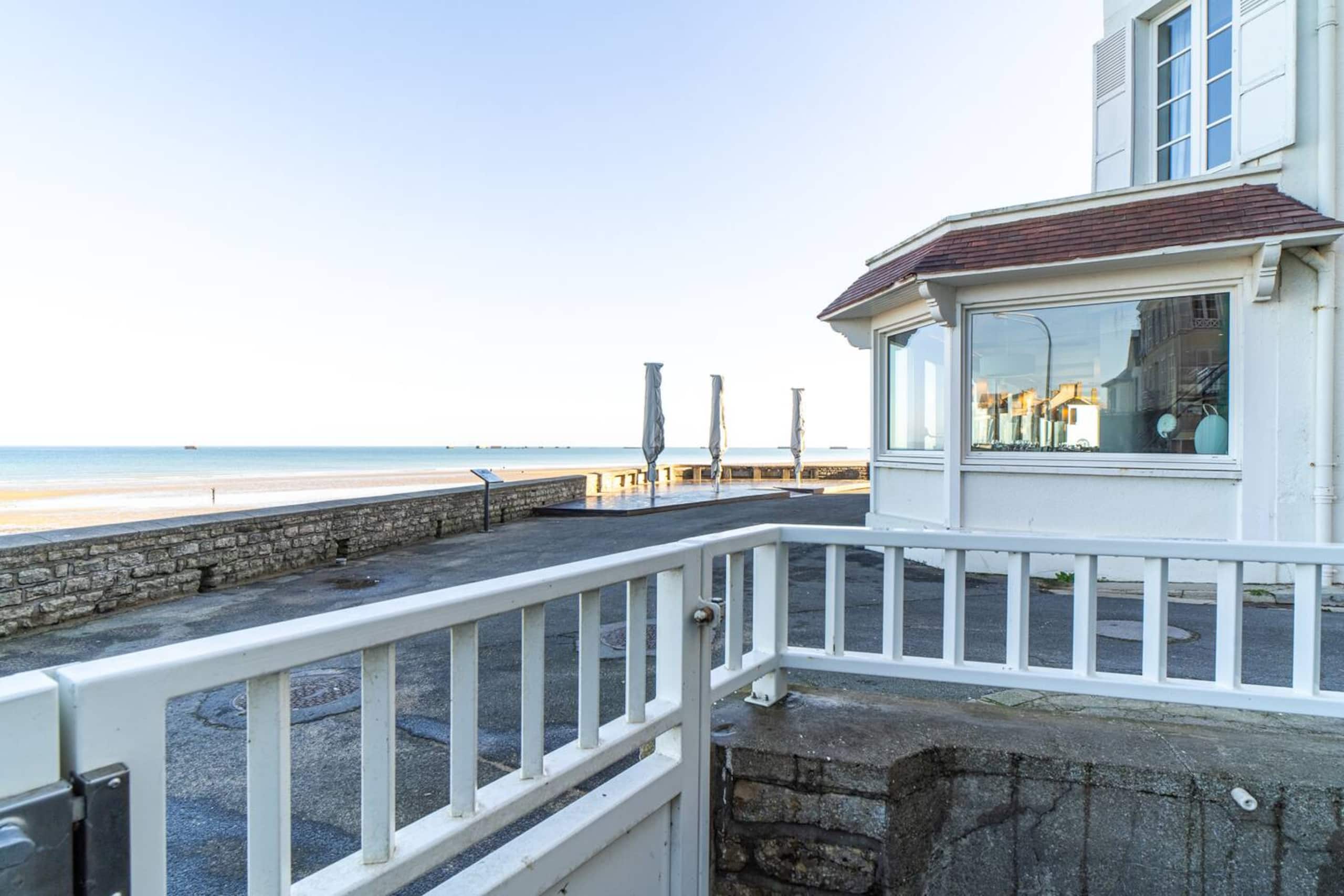
Villa Bellevue — the 3-day plan base
10 guests, sea view, walking distance to Day 2's sites, 15 min to Bayeux, 30 min to Omaha. Book once, drive from here.
Check availability →Prefer a private guided tour?
Our local partner Mathilde Legoupil — bilingual licensed tour guide (Immersive Normandy Tours) — runs private half-day and full-day tours of the D-Day beaches, Bayeux, the Longues-sur-Mer battery, Mont-Saint-Michel and Giverny. Ideal for American, British, Canadian and Australian visitors who want context and depth without driving themselves. See her profile on our partners page.